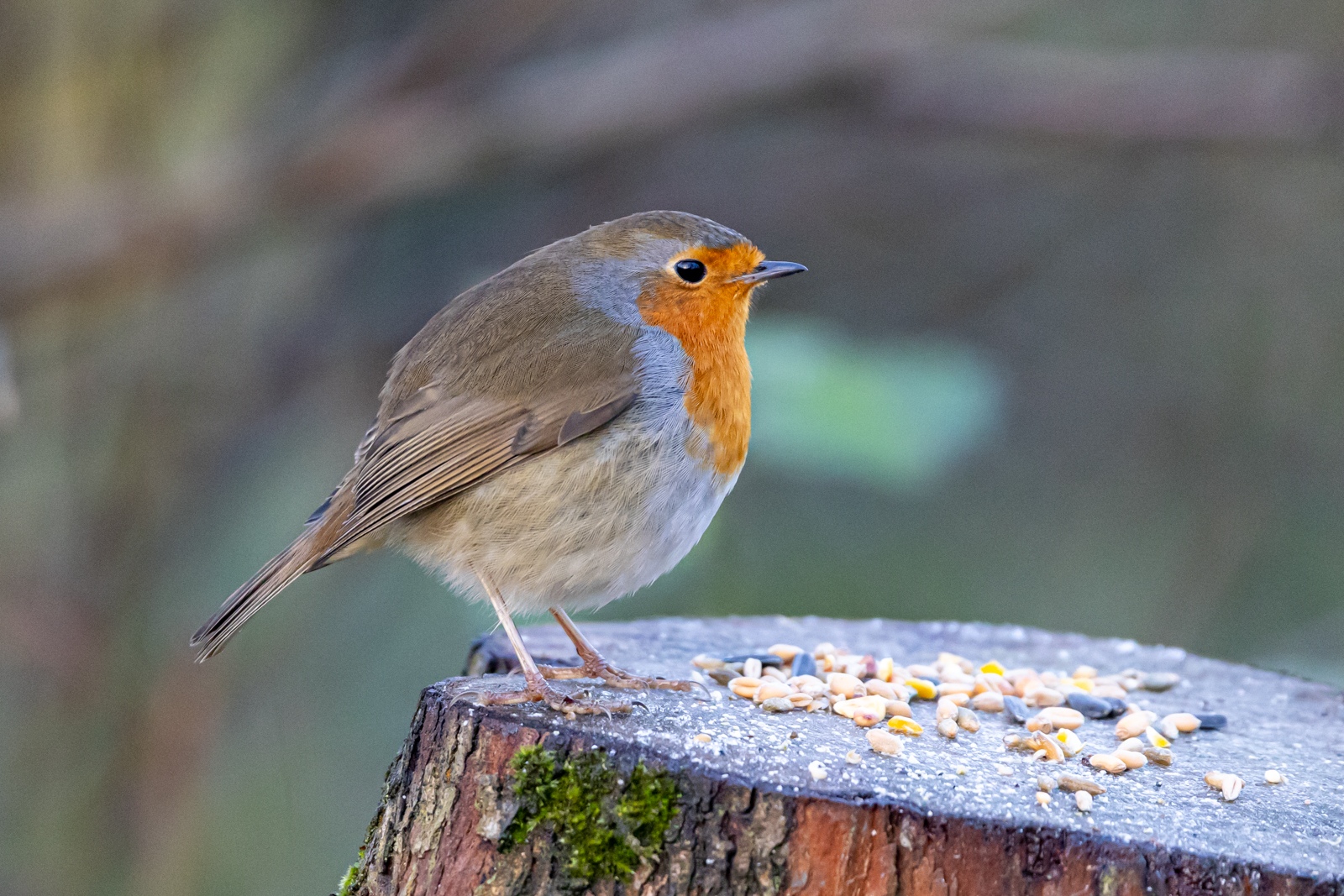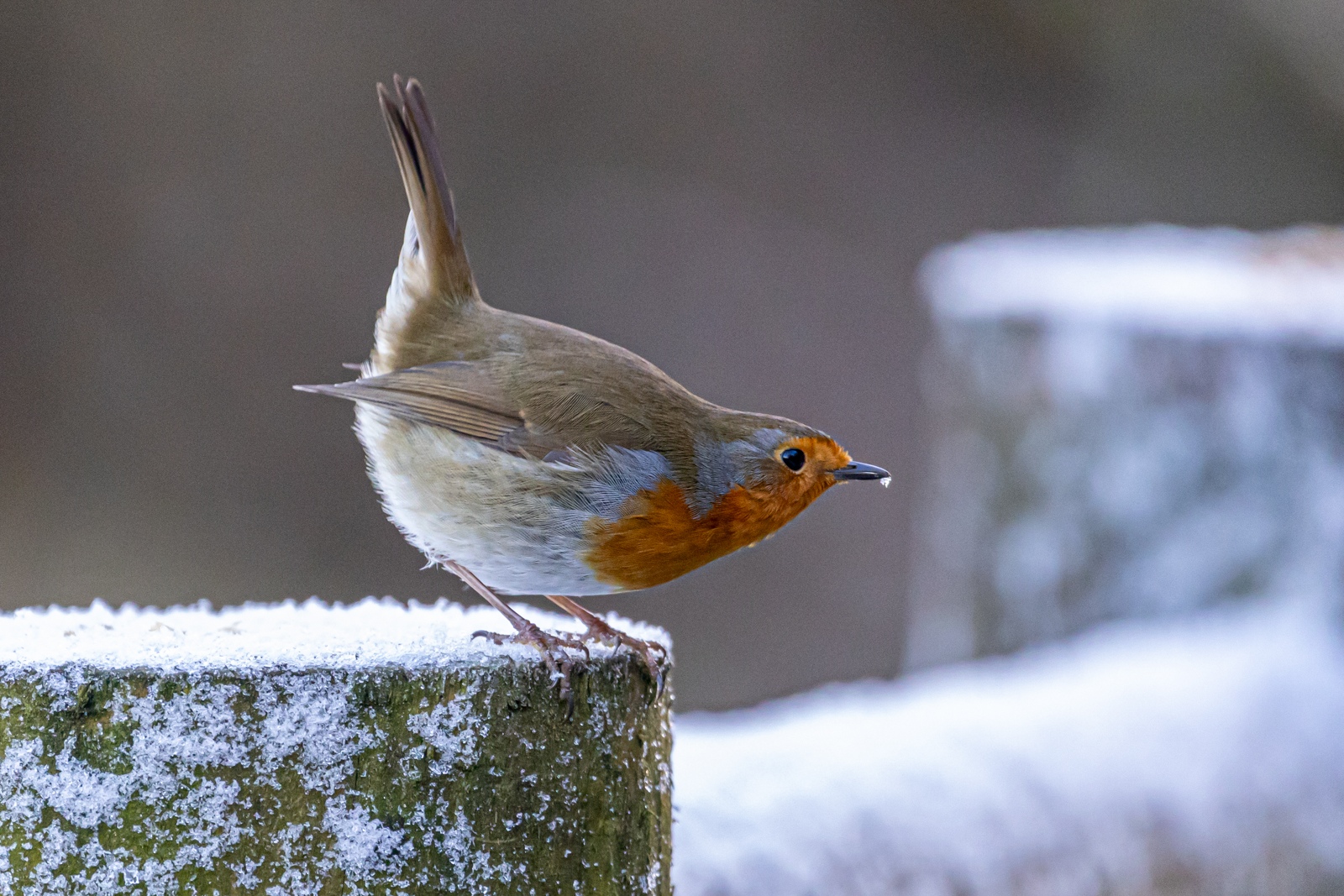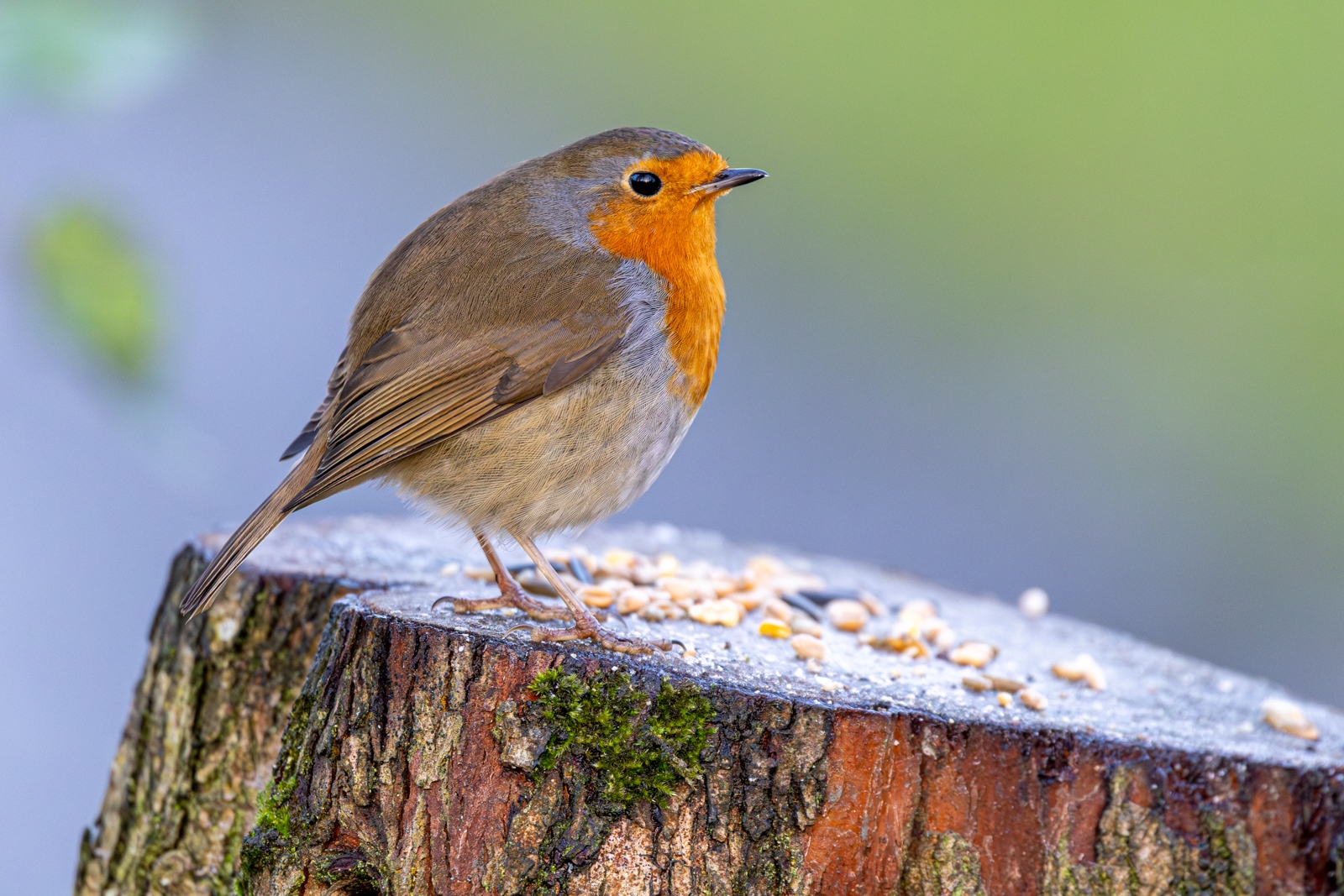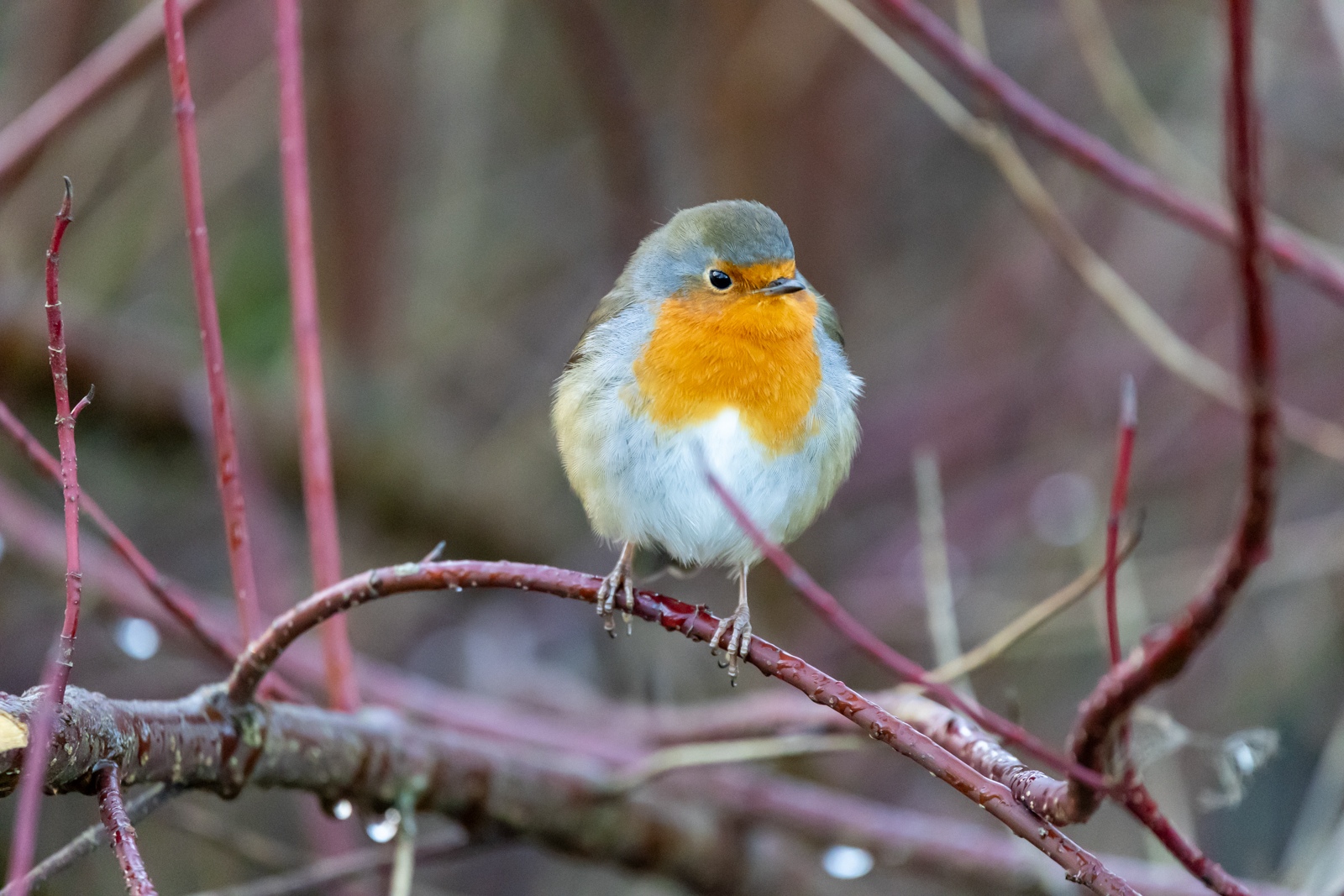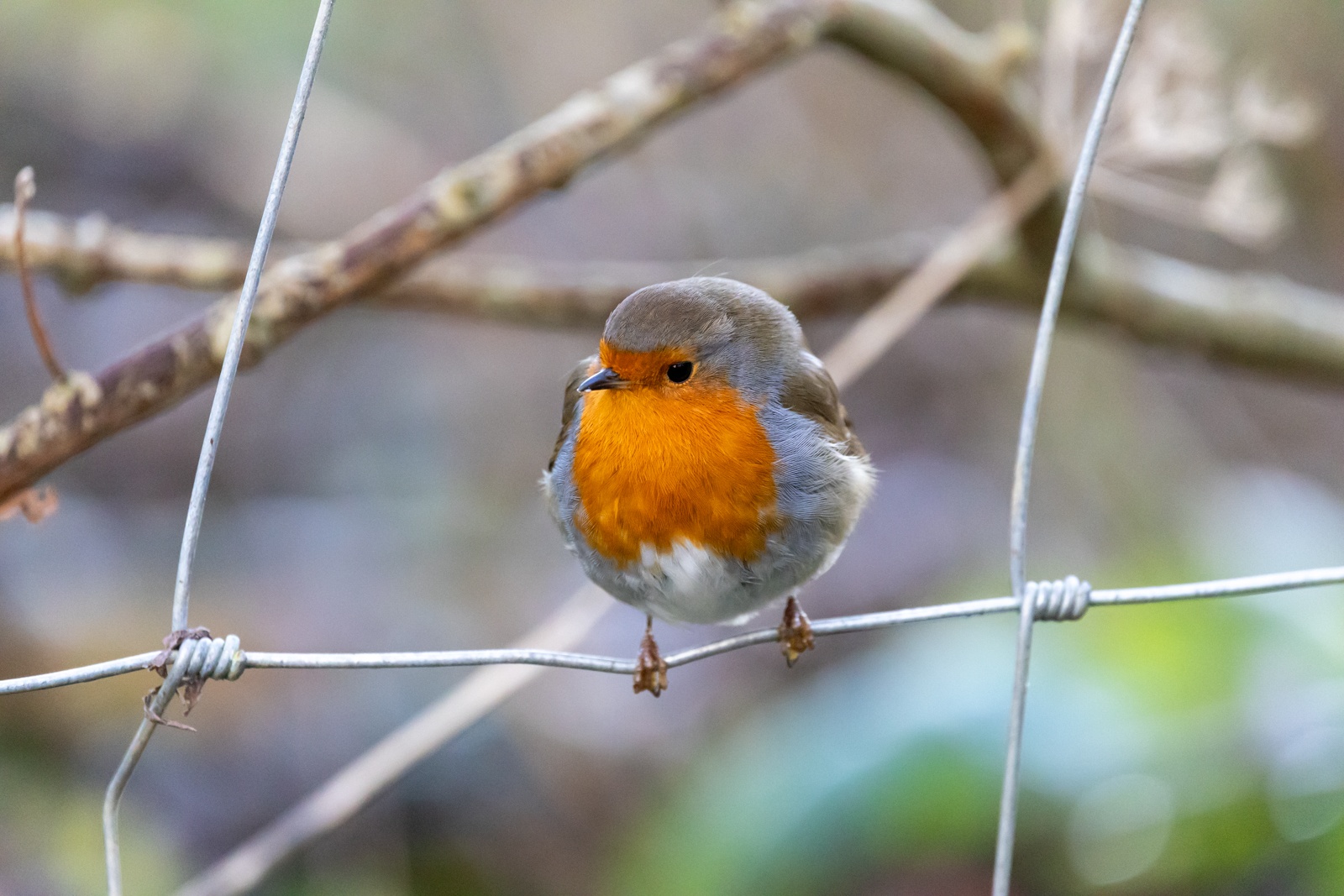
The European Robin (Erithacus rubecula) is one of the most recognizable birds in Northern Ireland, distinguished by its vibrant orange-red breast, face, and throat. Adults feature olive-brown upperparts, a white belly, and large black eyes that stand out against their colorful plumage. Interestingly, male and female robins look almost identical, making them difficult to distinguish by sight alone. Juvenile robins lack the signature red breast, instead possessing speckled golden-brown feathers that provide camouflage until their first moult at around two to three months of age.
In terms of habits, the robin is famously bold and inquisitive, often following gardeners to snatch worms and insects unearthed from the soil. Despite their “friendly” reputation, they are aggressively territorial year-round; both males and females will fiercely defend their patch, sometimes fighting rivals to the death. They are among the few birds that sing throughout the winter, and in urban areas, they are known to continue their melodic warbling into the night under the glow of streetlights. Their diet is varied, consisting of invertebrates like spiders and worms, supplemented by seeds and berries during colder months.
When nesting, robins are remarkably adaptable and often choose unconventional locations. While they naturally prefer concealed spots in ivy, tree cavities, or hedge banks, they frequently utilize man-made objects such as old boots, plant pots, or even discarded kettles. The female typically constructs a neat cup-shaped nest from moss, leaves, and grass, usually positioned close to the ground. Breeding generally begins in March, though mild winters can occasionally prompt earlier pair formation in January.
In Northern Ireland, robins are widespread residents and can be found in almost every habitat, from rural woodlands to suburban gardens and city parks. They are considered the most widespread garden bird in Ireland, recorded in approximately 99% of gardens during the winter. While the local population is largely sedentary, their numbers are often bolstered in the winter by migrant robins arriving from colder regions like Scandinavia and Russia to take advantage of the milder Atlantic climate. They remain visible throughout the year, though they may become more secretive during their moulting period in late summer.